
Solidarity Projects
Learn about:
- Aims and impact of Solidarity Projects
- Activities you can take part in
- Who can take part
- Funding
Solidarity Projects
What is a Solidarity Project?
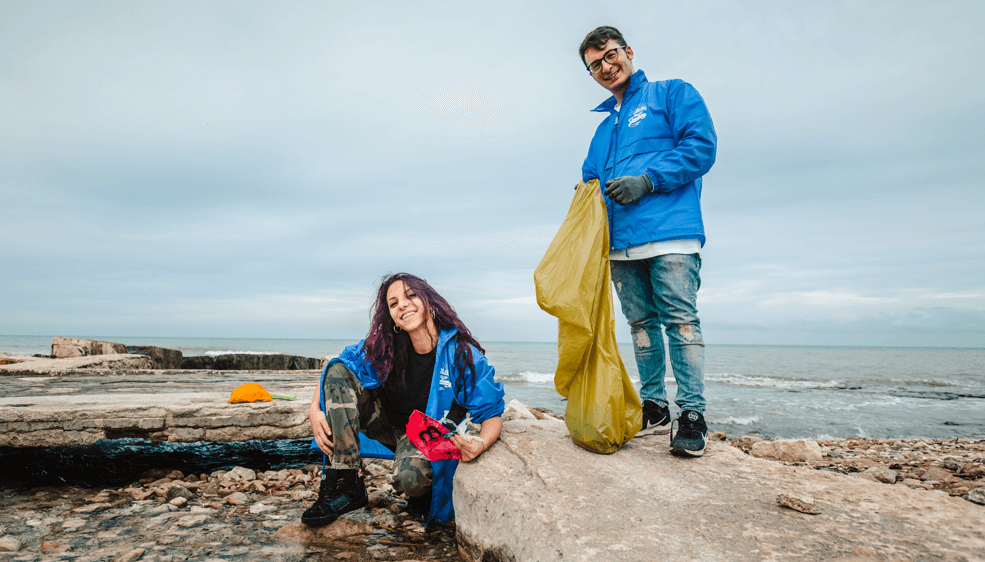
A Solidarity Project is one started, developed and carried out by young people themselves. Small groups come together to bring positive change to their local community. The project should have a clearly identified topic and address a key challenge. Projects can last from two to 12 months.
How Will a Solidarity Project Benefit Me?
Starting a Solidarity Project is an active and practical way to take on challenges you see around you. It will also give you great experience in working with others, and how to plan and see a project through to its end.
How Do I Get Involved?
The first step is to register on the European Solidarity Corps portal. If you already have a group who want to run a solidarity project together, you can seek support from a public or private organization to help you apply. This organisation’s support should focus on administration and finance, not the project plant itself. If you need it, the organisation can also help you to identify and document the learning outcomes from the project.
If you would prefer to work with a coach, you can do that too! Coaches are people with youth work experience who empower the group to successfully carry out the project. This could be a youth worker or a leader at a youth organisation. You can work with more than one coach if it’s helpful. The coach is considered an external helper, not There is no maximum number of group members, but it is important to note that the coach is not considered a member of the group, and more than one coach can be used.
Solidarity Projects: What is involved?
 Play video about Solidarity Projects: What is involved?
How Is a Solidarity Project Organised?
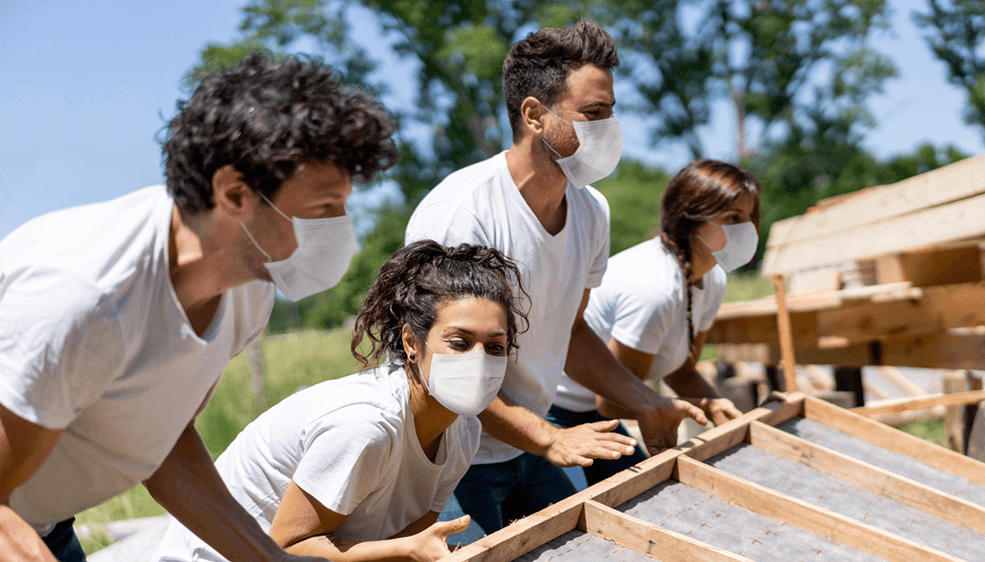
A Solidarity Project takes place in the same country that the organising group lives in. The group themselves decide on their way of working, and how the project will be managed. One group member takes the role of ‘legal representative’ and submits the application. Remember, if you choose to work with an organsiation they can submit the application on your behalf.
The group arranges the distribution of tasks and responsibilities, makes sure there is a clear plan and timeline for carrying out the project, and that all the group members are communicating with each other. Working methods should involve all members of the group as much as possible. The project has four phases:
- Planning
- Preparation
- Carrying out the activities (‘implementation’)
- Follow-up (this includes evaluating the project and sharing the results).
Can I Take Part?
To take part you need to be aged between 18 and 30 years old. You must be part of a group that has at least five members, who all live in the same programme country. You must be available to carry out the full project, which can last from two up to 12 months. Finally, you have to register on the on the European Solidarity Corps Portal.
Where do I Register My Interest?
Register on the European Solidarity Corps Portal. The Portal is a place for young people and organisations to find each other. When you have registered, an organisation can contact you and ask you to take part in a project. Young people with fewer opportunities may receive support from organisations to complete registration. And remember, some of the terms we use can seem overwhelming at first, so check out our Jargonbuster page for a handy glossary!
Application Deadline
Visit our Deadline page for more information.
What Funding is Available?
- Project Management – Costs linked to managing and carrying out the project.
- Coaching costs – Costs linked to the involvement of a coach in the project.
- Exceptional costs – costs for providing a financial guarantee, if you are asked for it.
What Else Do I Need to Know?
To be considered for funding, your proposal has to score at least 60 points when it is evaluated. It also has to score at least half of the maximum available points for each of these categories:
- Relevance, rationale and impact of the project
- Quality of the project design
- Quality of project management.
Read our section on Applying for a Solidarity Project for more detail.


Key Events

Erasmus+ KA122 VET Information Session
This information session will give an overview of Erasmus+ short-term mobility opportunities for staff and learners in the VET sector.

What’s New in ADU? Adult Education Information Session
The new Programme Guide for 2027 will include a few important changes! Learn more about what is changing for Adult Education Erasmus+ projects in 2027.

Erasmus+ Online Speed Dating Event for Adult Education Partners in Ireland and UK
In advance of the U.K. joining Erasmus+ in 2027, join this “speed dating” event designed to connect UK and Irish adult educational organisations.
UK and Ireland Partner Finding Webinar for Vocational Education and Training – KA1 and KA2
In advance of the U.K. joining Erasmus+ in 2027, the British Council, with Léargas, will be holding an online partner finding webinar for both Irish and U.K. VET organisations.

KA122 Online Information Session: School Education
Hear about Erasmus+ opportunities for your school ahead of the KA122 Application Deadline in February 2027.

European Conference “Schools in Times of Transition: Well-Being and Social Cohesion in a Changing Europe”
Newcomers and experienced beneficiaries come together to explore how Erasmus+ and eTwinning can strengthen well-being, resilience and social cohesion in schools amid a changing Europe.
European Solidarity Corps Links

Latest News
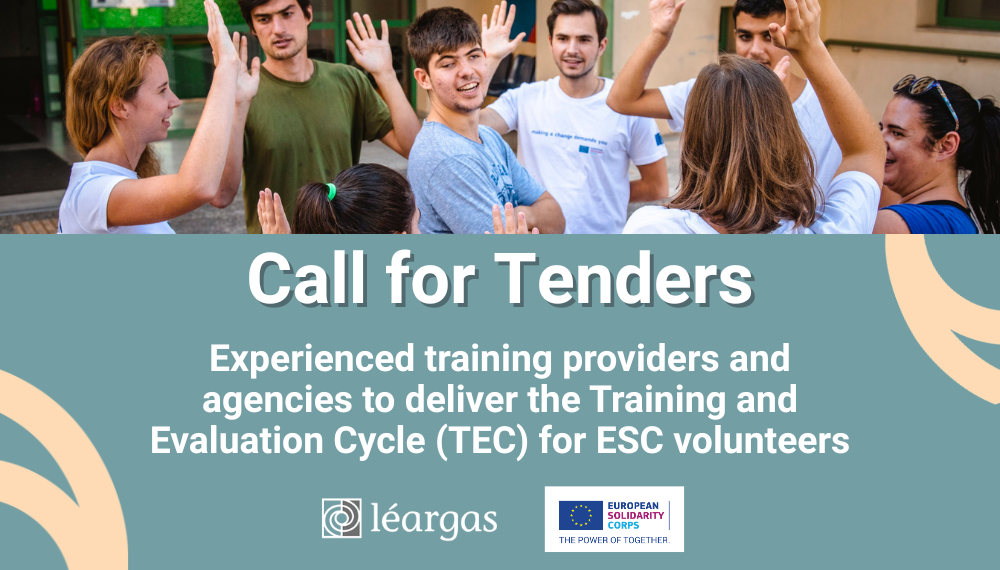
Call for Tenders: Training and Evaluation Cycle (TEC) for ESC volunteers
Léargas, as the National Agency for the European Solidarity Corps (ESC) in Ireland, invites tenders from experienced training providers and agencies to deliver the Training and Evaluation Cycle (TEC) for ESC volunteers.